
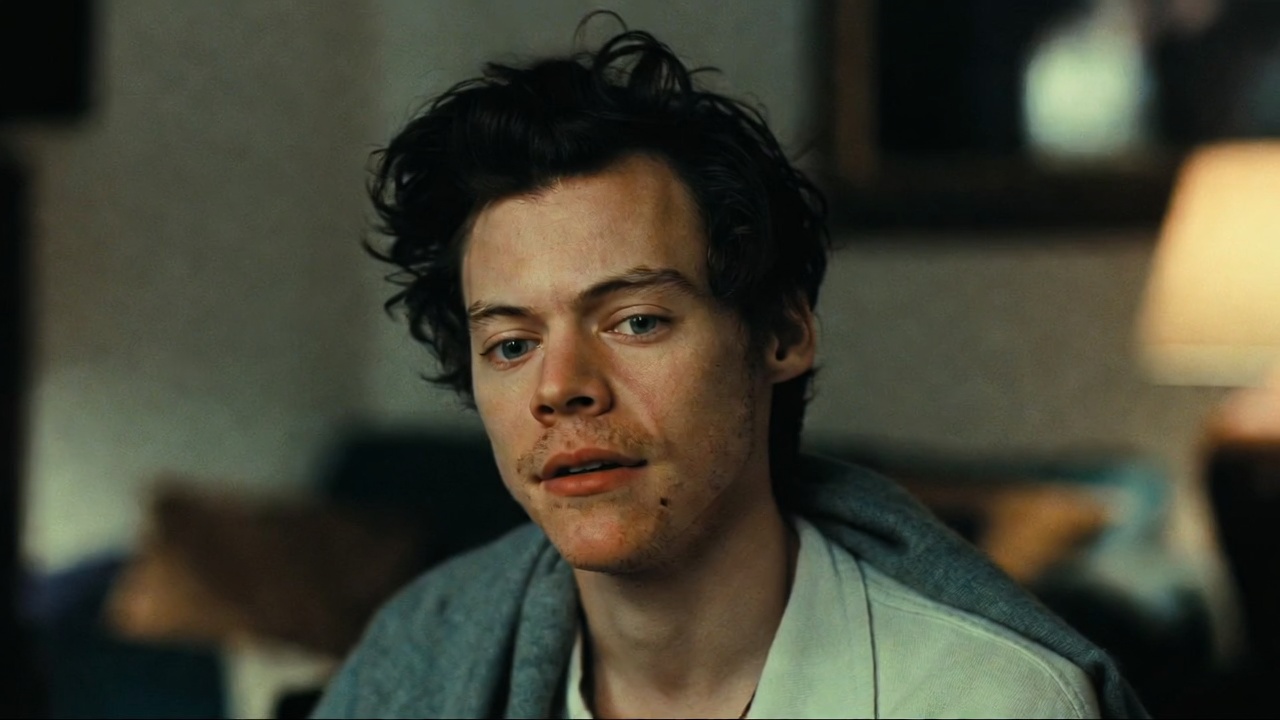
In an era of radical celebrity transparency — where every meal, every workout, every opinion is available for public consumption approximately thirty seconds after it occurs — Harry Styles has achieved something genuinely countercultural: he has maintained a private self. Not through hostility toward his audience or media paranoia, but through a quiet, consistent commitment to keeping certain chambers of his life entirely his own.
What occupies those chambers is, by definition, largely unknown. But pieces have emerged over the years through the accounts of friends, collaborators, and the rare unguarded moments that even the most carefully private public figures occasionally allow. And the portrait that emerges is surprising in the best possible way — a man whose private reality is richer, stranger, and more interesting than even the considerable mythology that surrounds his public persona.
The reading, to begin with, is voracious. Multiple people who have spent extended time with Styles describe a person whose relationship with books borders on obsessive — not the performative literary taste-signaling common among celebrities, but a genuine, decades-long love affair with literature that spans genres, time periods, and languages. He reportedly travels with a minimum of six books at all times and reads for several hours daily when not in production.
The cooking comes as a surprise to many who know him primarily through his public persona, but those who have been guests at his homes describe meals of genuine ambition and execution. He apparently approaches the kitchen with the same perfectionist energy he brings to music production — researching techniques, sourcing ingredients with deliberate care, and treating the experience of feeding people as a meaningful act of connection rather than a domestic obligation.
His charity work — conducted almost entirely outside of public view, without press releases or social media documentation — has apparently been both significant and sustained. Sources with knowledge of his philanthropic activities describe a person who made a deliberate decision early in his career to separate his giving from his brand-building — to donate without documentation, to show up without photographers, and to measure the impact in outcomes rather than column inches.
The creative life between albums is perhaps the most fascinating element of the private Harry. Collaborators describe someone who is always making things — not necessarily with any commercial intention, but because the act of creation appears to be as fundamental to his existence as sleep or food. Paintings, short films, musical experiments that may never be heard publicly, writing that he has never discussed in any interview. A vast private archive of making.

Those who know him well are consistent in one particular observation: the Harry Styles who exists away from the spotlight is, paradoxically, more fully himself than the already compelling public figure. The wit is sharper. The curiosity is more expansive. The emotional presence is deeper. “The stage version is real,” a longtime friend shared. “But it’s like — a concentrated version. The full person is much more complex and much more interesting than even the most devoted fan probably imagines.”
In a cultural moment that commodifies intimacy and monetizes vulnerability, Harry Styles’s insistence on keeping his private self genuinely private feels almost radical. It also, perhaps not coincidentally, appears to be a significant source of his creative longevity. The mystery sustains the music. And the music, in turn, sustains the mystery. It is a loop that serves both artist and audience — even if only one of them fully understands why.